Materials & sleep design
Obasan Mattress Layers: Latex or Hybrid for Articulating Bed Frames?
An articulating bed frame changes more than the silhouette of a bedroom. As its deck lifts and lowers, the mattress must bend, settle and return to shape without compromising support. When comparing Obasan latex and hybrid mattresses, the decisive question is not simply which construction sounds more comfortable. It is whether the specific mattress model is approved for the movements, dimensions and weight limits of the frame you plan to use.
The short answer: verify the exact pairing
Latex and hybrid describe broad construction families, not guarantees of adjustable-base compatibility. A mattress made primarily of latex may feel supple and responsive, but its weight, thickness, internal layering and cover can all affect how it behaves when elevated. A hybrid typically combines foam or latex comfort layers with a coil unit; the design and flexibility of that coil system matter as much as the word “hybrid” on the label.
Obasan offers different mattress constructions, and specifications may vary between models and sizes. Before choosing, check the current guidance for the precise mattress and articulating frame—not just the brand or category. Confirm that the mattress is approved for repeated articulation, learn whether there are restrictions on the angle or frame style, and review both manufacturers’ warranty terms. If the information is unclear, ask the mattress maker and frame maker directly and keep their response for reference.
This is a practical comparison rather than a universal verdict. One latex mattress may be suitable for a particular adjustable platform while another construction may not be. Likewise, some hybrids are engineered to flex with a moving foundation, while others are intended for a conventional, flat support surface.
What an articulating frame asks of a mattress
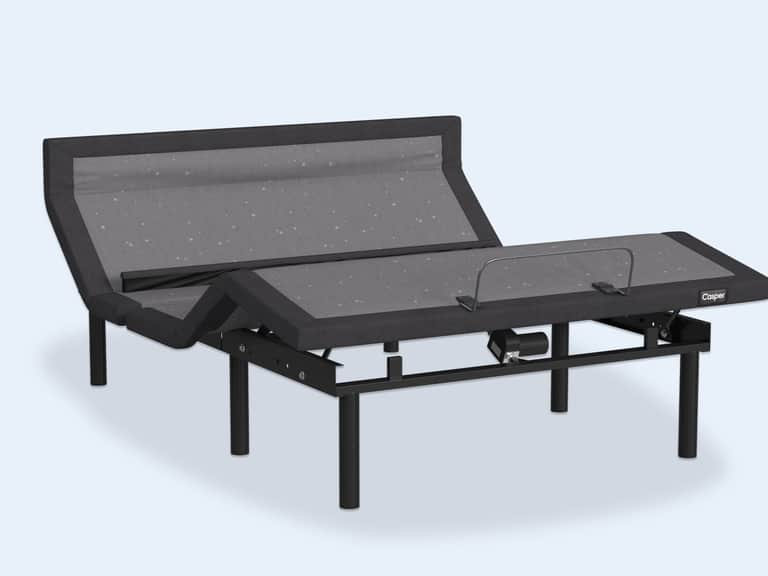
An articulating, or adjustable, bed frame changes the angle of the sleeping surface, commonly at the head and foot. In a neutral position, a mattress rests across the frame as it would on a flat foundation. When the sections rise, the mattress has to follow the contours of the moving deck. It bends at transition points, shifts subtly against the upholstery and experiences changing pressure across its layers.
That movement makes compatibility a question of design, not merely comfort. The mattress must flex in the intended places while remaining properly supported. It should not be forced into a position its construction cannot tolerate, and it should fit the platform so that its edges are not unsupported or obstructed. A mattress that is too heavy for the frame may also exceed the frame’s stated capacity once sleepers and bedding are added.
The frame itself matters, too. Some adjustable bases have a continuous support surface; others use articulated sections, slats or a split configuration. The deck’s dimensions, hinge locations, retainer bar and side rails can all influence fit. A mattress can appear to sit correctly while flat yet behave differently once the head or foot section moves.
- Flexibility: Can the construction bend at the frame’s articulation points without damage or distortion?
- Support: Does the frame provide the type and spacing of support required by the mattress?
- Weight: Is the combined load of the mattress, sleepers and bedding within the base’s capacity?
- Fit: Do the mattress dimensions suit the platform, including any split or retainer-bar arrangement?
- Warranty: Do both manufacturers permit the intended use and frame configuration?
Latex: buoyant comfort, with details to check
Latex is valued for a responsive, buoyant feel. Rather than slowly enveloping the body in the way some softer foams can, it tends to compress under pressure and spring back when that pressure changes. In a mattress, layers of latex can contribute contouring, pressure distribution and a sense of lift. The result depends on the latex formulation, firmness, thickness and arrangement of the layers—not on the material name alone.
That resilience may sound well suited to a moving bed, but “latex” does not automatically mean “adjustable-base compatible.” A mattress’s total construction is more than its comfort layer. Its core, internal transitions, cover and overall weight influence how it bends and stays in place. A thick, firm or substantial mattress may behave differently from a thinner, more flexible model, even if both use latex.
For an Obasan latex model, look up the manufacturer’s guidance for that exact model and size. Ask whether the mattress can be used on a powered articulating frame and whether there are limits on the frame’s design, articulation, slat spacing or positioning. If the mattress is assembled from distinct layers, do not assume that the layers can be rearranged or handled differently for use on an adjustable base; follow the maker’s instructions for both assembly and care.
When trying a compatible latex mattress, notice how it feels in more than one position. A surface that feels supportive when flat may distribute pressure differently with the head raised. Check that your pillow continues to support your neck and that your hips and lower back feel comfortable as the bed moves. The frame’s presets are starting points, not a prescription for a particular posture or health outcome.
Hybrid: a layered system, not one fixed recipe
A hybrid mattress combines a coil-based support system with comfort materials such as latex or foam. The label tells you that more than one material family is involved; it does not, by itself, explain how the mattress will respond to articulation. Coil type, unit construction, perimeter reinforcement, comfort-layer thickness and mattress profile all influence flexibility and movement.
Some coil systems are designed to flex as the foundation changes shape. Others may be better suited to a flat platform, depending on their construction and the manufacturer’s instructions. A hybrid can also feel different from a latex mattress at the same advertised firmness. The coil unit may provide a more spring-like response, while the upper layers contribute cushioning and contouring. Neither sensation alone establishes compatibility.
For an Obasan hybrid, request the specifications and use guidance for the particular model you are considering. Ask whether its support system is approved for the movement of your frame, whether any frame type is excluded, and whether repeated adjustment affects warranty coverage. If the frame uses a split deck or independent sides, confirm whether the mattress is intended to span that configuration or whether a different setup is required.
Pay attention to movement while testing. When a base rises, a hybrid may settle or shift differently from an all-latex mattress. A properly fitted mattress should remain supported by the deck, and the frame’s retaining system should be used only as directed. Avoid improvising restraints or placing the mattress on an arrangement that the frame manufacturer does not approve.
A considered comparison: what the labels can and cannot tell you
The following comparison is a framework for questions, not a ranking of Obasan models. Construction details differ, and manufacturer guidance for the exact mattress should take precedence over general expectations.
| Consideration | Latex construction | Hybrid construction |
|---|---|---|
| Typical feel | Often buoyant and responsive; feel varies with firmness and layering. | May combine a spring-like support feel with cushioning from upper layers. |
| Movement on a base | Must be checked for the complete mattress, including its core and cover. | Depends in part on how the coil unit and comfort layers respond to articulation. |
| Weight and profile | Can vary substantially by model, size and thickness. | Can also vary substantially; the coil system does not make weight predictable. |
| Most important check | Written approval for the exact model on the intended frame. | Written approval that addresses the specific support system and frame type. |
In short, the most useful comparison is not “latex bends; hybrid does not” or the reverse. It is the manufacturer’s compatibility statement, supported by the actual construction and operating limits of the frame.
The specifications to verify before you buy
A few minutes spent checking technical details can prevent an expensive mismatch. Bring the full model names and sizes of both the mattress and frame into the conversation. If you already own the bed frame, locate its manual and product label before asking questions. If you are buying both at once, request confirmation that the proposed combination is suitable rather than relying on a general statement that adjustable bases accept “most” mattresses.
- Exact model compatibility. Ask whether the specific Obasan mattress is approved for use on an articulating frame. Broad statements about latex, hybrids or adjustable beds are not a substitute for model-level guidance.
- Frame design and articulation. Identify whether the base has a continuous deck, articulated sections, slats or a split configuration. Ask if the mattress has requirements for the support surface or limits on movement.
- Dimensions and thickness. Confirm that the mattress size matches the frame and that its profile is suitable for the frame’s retainers, side structure and moving sections. For split arrangements, clarify whether a single mattress or separate mattresses are intended.
- Weight capacity. Check the frame’s maximum supported load and how the manufacturer defines it. Include the mattress, sleepers, bedding and any additional load specified in the manual.
- Warranty language. Read the mattress and frame warranties, paying particular attention to foundation requirements, approved use and exclusions related to improper support or movement.
- Setup and handling. Ask how the mattress should be positioned, whether it needs a retaining bar, and what precautions apply when lifting, moving or adjusting it. Follow the written instructions rather than forcing a tight fit.
- Care and service. Confirm cleaning methods, rotation guidance if applicable, and what to do if the mattress shifts, develops an unusual feel or appears damaged after adjustment.
Save manuals, product specifications and any written confirmation. If guidance from the mattress and frame makers seems inconsistent, pause before operating the combination and ask them to clarify the specific point. A confident purchase is built on compatible instructions, not assumptions.
How to test the pairing at home
Once the manufacturers confirm compatibility and the mattress is correctly installed, begin with the frame in its flat position. Check that the mattress sits evenly, is aligned with the platform and is held in place only by the frame’s intended hardware. Make sure bedding, cables and nearby furniture are clear of moving parts.
Operate the base gradually through its approved range. Watch the mattress at the head, foot and sides as the deck moves. It should follow the frame without being pinched, pulled sharply or pressed against a wall or headboard. If it slides, bunches or resists the frame, return it to a safe flat position and consult the manuals or manufacturers; do not try to correct a suspected fit problem by forcing the mattress or adding unapproved straps.
Then assess comfort in the positions you expect to use. A raised head section can change how your pillow supports your neck. A raised foot section may alter the sensation around the knees and hips. Move in small increments, settle for a few minutes and note whether the mattress remains supportive. Personal comfort varies, so neither a preset nor a material category can guarantee a particular result.
Care, movement and long-term use
Use the mattress and frame according to their respective manuals. Keep the frame’s moving areas free of objects, and avoid sitting or placing concentrated loads at points the frame maker identifies as unsuitable. Do not exceed the stated capacity. These are straightforward precautions, but they matter because an adjustable base is a moving system, not a static foundation.
Follow Obasan’s care instructions for the chosen mattress rather than applying a generic routine. If rotation is recommended, check how to do it safely with the mattress’s construction and frame. Do not flip a mattress unless the manufacturer says it is designed to be used on both sides. Use only cleaning methods approved for its materials and cover.
Pay attention to changes over time. A new sound from the frame, unusual mattress movement, a change in how the mattress bends or visible damage deserves attention. Stop using the frame if you suspect a safety or compatibility issue, and contact the relevant manufacturer. A serviceable mattress-and-base combination should operate within its designed range; it should not need improvised repairs to do so.
Which construction should you choose?
Start with feel, then let documented compatibility narrow the field. If you prefer the buoyant response associated with latex, compare the precise Obasan latex models that meet your comfort and size requirements and ask about their use on your frame. If you prefer a hybrid’s combination of coils and cushioning, take the same approach with its model-specific specifications. Do not assume that one category is inherently safer or more suitable simply because it contains fewer—or more—material types.
Think about the way you will use the bed, too. Consider how often you plan to articulate it, whether you need a split arrangement, and how much clearance the frame requires in your room. Factor in mattress weight, delivery access and the practicalities of making the bed. A beautiful material story matters, but so do dimensions, service instructions and the ease of living with the whole system.
For a thoughtful purchase, compare the mattress and base as a single sleep setup. Comfort is personal; compatibility is something to verify. Ask precise questions, keep the answers, and choose only after the frame and mattress makers’ instructions agree. Whether you lean toward latex or hybrid, that is the most dependable route to a bed that feels considered in its materials and works as intended in motion.
A concise pre-purchase checklist
- I have the exact Obasan model and mattress size.
- I have identified the articulating frame model and its support-surface design.
- The mattress maker has confirmed compatibility for this pairing.
- The frame maker’s weight limits and setup requirements are clear.
- Both warranties allow the intended configuration and use.
- I understand the care, movement and safety instructions for both products.